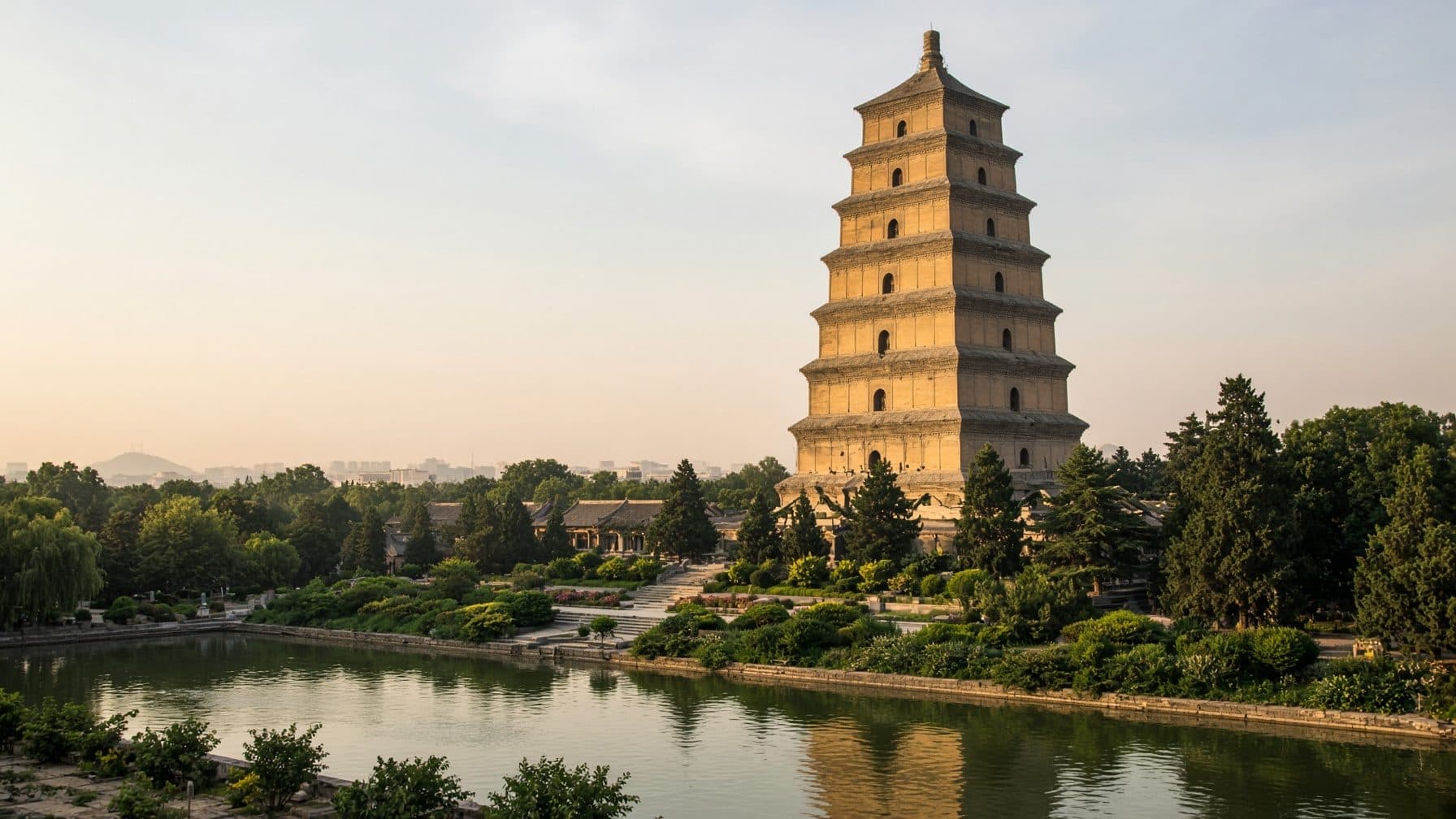
Tang Chang'an was laid out on a grid around Zhuque Avenue, a hundred and eight wards like a chessboard. Missions from Persia, Sogdiana and Japan walked the same street. When Xuanzang returned from India he translated sutras at Da Ci'en Temple; the Giant Wild Goose Pagoda was built to hold them — plain, vertical, unshowy.
Climb it now and you see modern Xi'an roofs and the Qinling range beyond. The brickwork still follows Tang logic: a taper, corbelling, silence. Datang Everbright City at night turns the golden age into a stage. For the city's actual scale, cycle the walls at dawn.
Leave the Forest of Steles for the afternoon. The calligraphy on the stones is not decoration; it is writing made public. A trip to Xi'an is poorer if it only chases Tang spectacle and never listens to the weathered sentences.
What to do
- Walk the Big Wild Goose Pagoda, built in 652 to house the sutras Xuanzang brought back from India — the pilgrimage that became the novel Journey to the West.
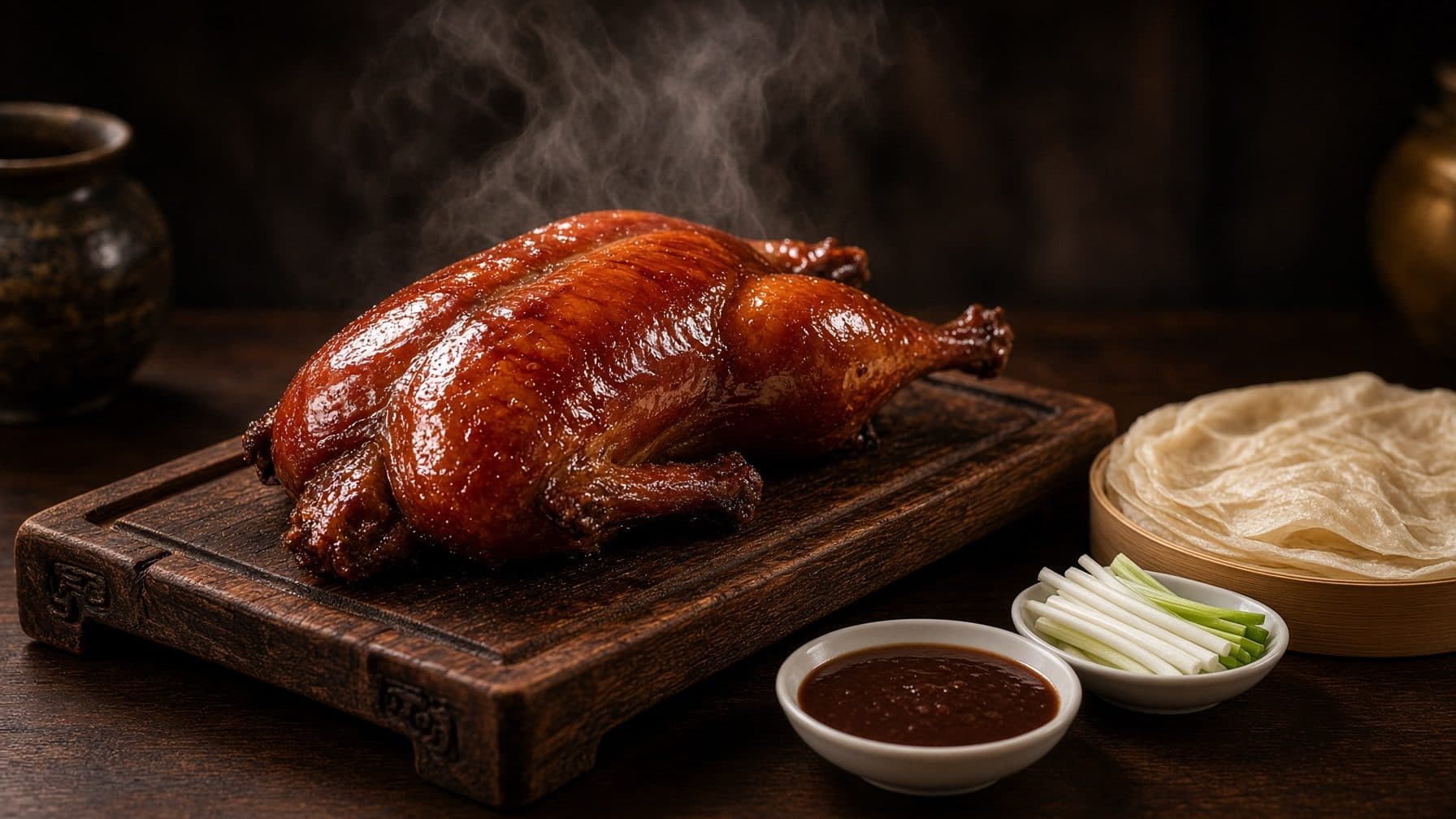
- Xi'an's Muslim Quarter is the living descendant of that foreign quarter, and the food is the reason to go at night.